


|
Quantity
|
Out of stock
|
||
|
|
|||
|
|
|||
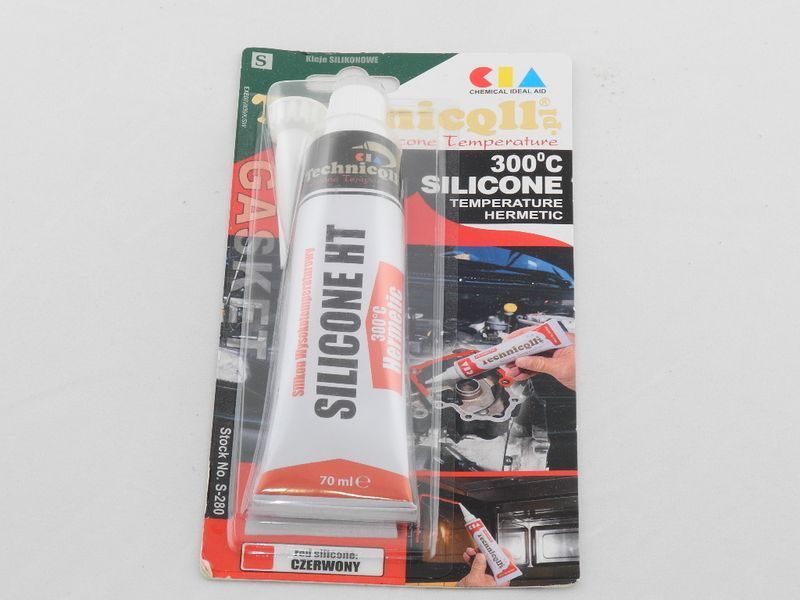
High-temperature silicone for ovens Nalmat (S-280)
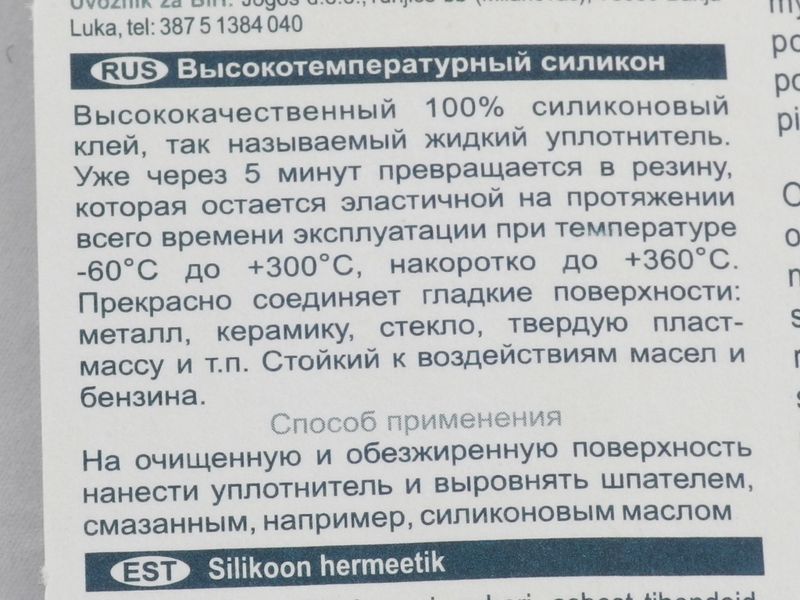
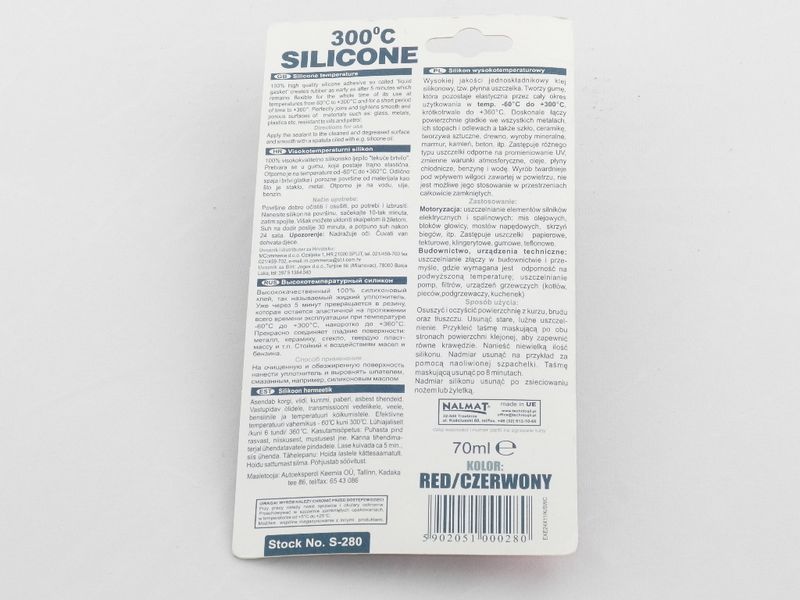
The high-temperature silicone Nalmat (S-280) is designed for use in ovens and other high-temperature environments. This 100% silicone adhesive, known as a liquid sealant, provides reliable sealing and bonding of various materials such as metal, ceramics, glass, and hard plastics. The silicone cures quickly, transforming into an elastic rubber that can withstand temperatures from -60°C to +300°C, with short-term resistance up to +360°C.
Technical specifications
| Parameter | Value |
|---|---|
| Type | High-temperature silicone |
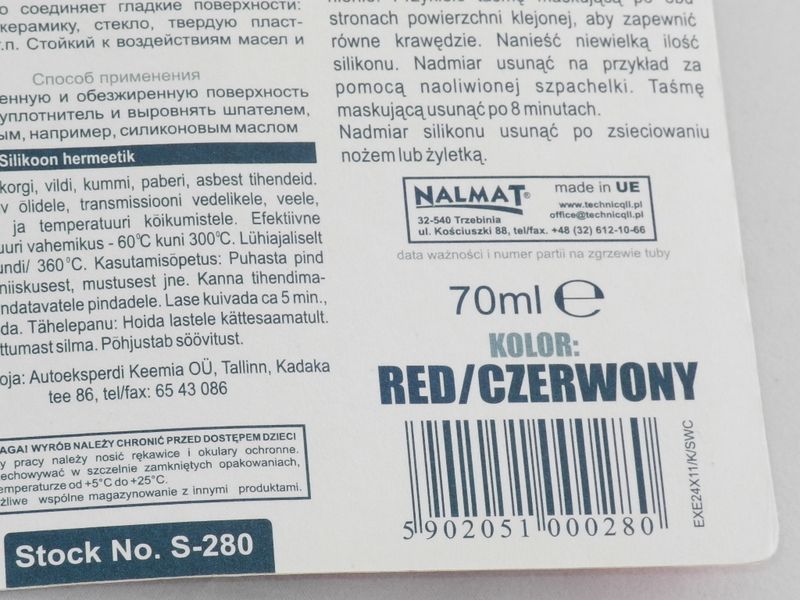
| Country of manufacture | Poland |
| Temperature range | -60°C to +300°C (short-term up to +360°C) |
| Compatibility | Metal, ceramics, glass, hard plastics |
How to choose the right product
When selecting a silicone sealant, it is important to consider the following points:
- Temperature conditions: Ensure that the selected silicone meets the required temperature ranges.
- Material compatibility: Check that the sealant is suitable for the surfaces being joined. For example, high-temperature silicone is recommended for metal and glass.
- Package volume: Choose the volume based on your needs.
Possible causes of failure and prevention methods
The main reasons why silicone may fail include:
- Failure to adhere to temperature conditions, exceeding allowable temperatures.
- Improper surface preparation: presence of oils or contaminants.
To prevent wear, it is recommended to:
- Regularly check the integrity of the joints.
- Re-seal areas exposed to high temperatures as needed.
Difficulty of replacement
The process of applying silicone sealant is quite simple and does not require special skills. Replacement steps:
- Prepare the surface: clean and degrease it.
- Apply silicone to the cleaned surface.
- Smooth the surface using a spatula coated with silicone oil.
- Allow time for complete curing.
Overall, the replacement takes about 30 minutes, including preparation and application time. The difficulty level can be assessed as low.