


|
Quantity
|
Out of stock
|
||
|
|
|||
|
|
|||
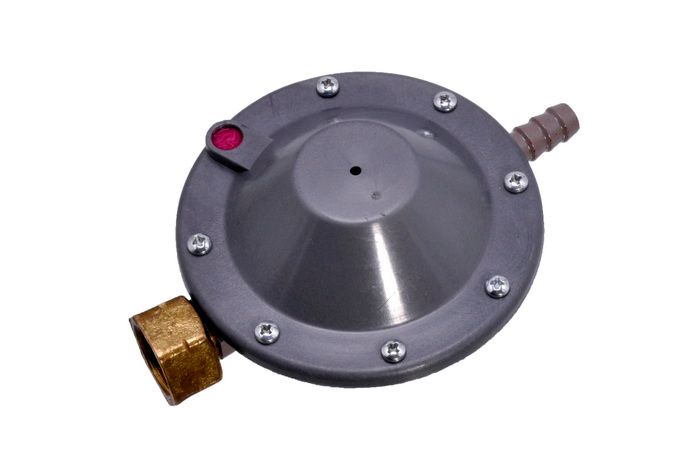
Reducer for household gas cylinder RDSG 1-1.2, Tsvetlit (2015)
RDSG 1-1.2 reducer is designed to regulate pressure in household gas cylinders, ensuring safe and efficient use of liquefied hydrocarbon gas. This reducer is suitable for various models of cylinders and is used in home applications for gas stoves, heaters, and other gas appliances.
Technical specifications
| Parameter | Value |
|---|---|
| Purpose | For cylinders |
| Type | Reducer |
| Working medium | Liquefied hydrocarbon fuel gas |
| Working pressure | 0.07-1.6 MPa |
| Operating temperature range | From -30 to +45 °C |
| Gas flow rate | At least 1.2 m³/h |
| Output pressure from the regulator | At least 2000 Pa, no more than 3600 Pa |
| Outlet fitting diameter | 12 mm |
| Inner diameter of the nut | 21.8 mm (left-hand thread) |
| Product dimensions | 145x105x49 mm |
| Quantity | 1 |
| Country of manufacture | Belarus |
How to choose the right product
When selecting a reducer for a gas cylinder, pay attention to the following parameters:
- Compatibility with your cylinder: ensure that the reducer matches the type and size.
- Working pressure: check that the pressure range meets the requirements of your equipment.
- Temperature conditions: ensure that the reducer can operate in the temperature conditions of your region.
- Gas flow rate: choose a reducer that meets the needs of your gas appliance.
Possible causes of failure and prevention methods
The reducer may fail for the following reasons:
- Pressure fluctuations in the gas, which can damage the mechanisms of the reducer.
- Low temperatures, which can lead to freezing and leaks.
- Malfunctions in gas equipment that create additional load on the reducer.
To prevent wear of the reducer, monitor its condition, conduct regular leak checks, and avoid overheating or overcooling.
Difficulty of part replacement
Replacing the reducer is quite simple and can be done by yourself. Follow these steps:
- Disconnect the gas cylinder from the gas appliance.
- Remove the old reducer by carefully unscrewing the nut.
- Ensure that the threads and connections are clean and undamaged.
- Install the new reducer, tightening the nut securely.
- Check all connections for leaks using a soapy solution.
Difficulty rating for replacement: low. Only basic skills in working with gas equipment and the appropriate tools are required.