


|
Quantity
|
Out of stock
|
||
|
|
|||
|
|
|||
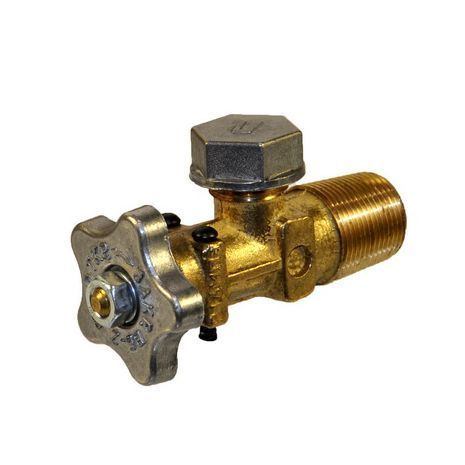
Valve for household gas cylinder VB-2 Belarus (2002)
Product description: The valve for the household gas cylinder VB-2 is designed to control the gas supply in gas equipment. This valve is suitable for use with gas cylinders with volumes of 5, 12, 27, and 50 liters. It provides a reliable connection and safe operation of gas equipment. This valve is intended for use with hydrocarbon gas in accordance with GOST 20448-90 and can withstand a working pressure of up to 1.6 MPa (16 kgf/cm²).
Technical specifications
| Parameter | Value |
|---|---|
| Purpose | For gas equipment |
| Type | Valve |
| Working pressure | 1.6 MPa (16 kgf/cm²) |
| Ambient temperature range | -40...+45 °C |
| Gas mass flow rate at inlet pressure of 1 MPa | 8.5 kg/min (min) |
| Working medium | Hydrocarbon gas according to GOST 20448-90 |
| Cylinder thread | W27.8 (tapered, right) |
| Outlet thread | SP21.8 LH (left) |
| Maximum dimensions | 41x47.5x69.5 mm |
| Body material | Brass |
| Knob material | Polymer |
| Package contents | Valve (x1), threaded aluminum plug (x1) |
| Country of manufacture | Ukraine |
| Additional specifications | For cylinders of 5, 12, 27, 50 liters |
How to choose the right product
When selecting a valve for a gas cylinder, pay attention to the following points:
- Thread type: ensure that the thread on your cylinder matches W27.8 (right) for the inlet and SP21.8 LH (left) for the outlet.
- Working pressure: check that your valve matches the working pressure of your equipment.
- Temperature range: ensure that the valve can operate in conditions where the temperature may vary from -40 to +45 °C.
Possible causes of failure and prevention methods
The main causes of valve failure may include:
- Corrosion from moisture and gas exposure — it is recommended to regularly check the condition of the valve and replace it if necessary.
- Mechanical damage — avoid strong impacts and falls, store the cylinder in a safe place.
- Wear of sealing elements — periodically check seals and replace them if necessary.
Difficulty of part replacement
Replacing the valve is a relatively simple task that can be done by yourself. Below are the steps for replacement:
- Disconnect the gas cylinder and check for leaks.
- Remove the old valve using the appropriate wrench.
- Ensure that the thread is clean and undamaged.
- Install the new valve, tightening it securely but not excessively.
- Check for leaks using a soapy solution.
Estimated difficulty of replacement: low. Required tools: thread wrench, soapy solution for leak testing.