


|
Quantity
|
Out of stock
|
||
|
|
|||
|
|
|||
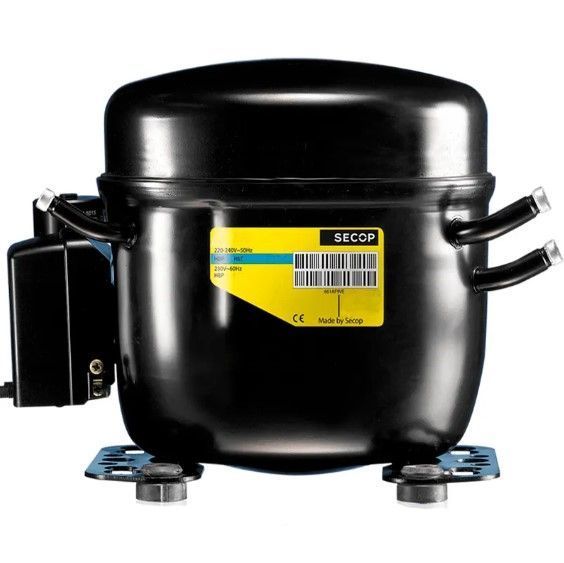
Danfoss Secop SC10MLX high-temperature compressor R404A
Product description: The Danfoss Secop SC10MLX compressor is a reliable reciprocating device designed for cooling systems using refrigerants R404A and R507A. This high-temperature compressor provides stable cooling performance and is suitable for various models of refrigeration units, ensuring efficient cooling in medium-temperature conditions.
Technical specifications
| Specification | Value |
|---|---|
| Model series | SC |
| Compressor individual code | 195B0345 |
| Compressor pallet code | 104L2506 |
| Compressor type | Reciprocating |
| Temperature range | Medium temperature |
| Cylinder volume | 10.29 cm³ |
| Refrigerant | R404A, R507A |
| Power supply voltage | 220 V/50 Hz/1 phase |
| Cooling capacity (cond. t° +45°C) |
|
| Suction pipe diameter | 8.2 mm |
| Discharge pipe diameter | 6.5 mm |
| Dimensions (height) | 209 mm |
| Warranty | 12 months |
How to choose the right compressor
When selecting the Danfoss Secop SC10MLX compressor, pay attention to the following parameters:
- The type of refrigerant used in your system.
- Power supply voltage and frequency (220 V/50 Hz).
- The cooling capacity required for your operating conditions.
- The diameter of the suction and discharge pipes for compatibility with your system.
Also, check if the compressor model meets the requirements of your equipment.
Possible causes of failure and prevention methods
Compressor failures can occur for the following reasons:
- Overheating due to insufficient refrigerant or system blockage.
- Electrical faults or incorrect power supply voltage.
- Wear of mechanical components due to prolonged use.
To prevent wear, regularly check the refrigerant level, conduct preventive inspections, and avoid overloading the compressor.
Difficulty of compressor replacement
Replacing the Danfoss Secop SC10MLX compressor may require certain skills and tools. The replacement process includes the following steps:
- Disconnect the device from the power supply.
- Drain the refrigerant from the system (if possible and safe).
- Disconnect the old compressor from the pipes and wiring.
- Install the new compressor, connecting it to the system.
- Charge the system with refrigerant and check for leaks.
- Turn on the device and check its operation.
If you do not have sufficient experience, it is recommended to consult a professional. Replacing the compressor can be considered a task of medium complexity.